
-300x300.jpg)
-300x300.jpg)


-300x300.jpg)

-300x300h.jpg)

-300x300.jpg)


-300x300.jpg)
-300x300.jpg)
-300x300.jpg)
-300x300.jpg)
-300x300.jpg)

-300x300.jpg)
-300x300.jpg)


Body Protection

Contents
- 1. Overview
- 2. Key Standards
- 2.1 EN 14605 – Liquid Chemical Protection (Type 3 and Type 4)
- 2.2 EN ISO 13982-1 – Protection Against Airborne Solid Particulates (Type 5)
- 2.3 EN 13034 – Limited Chemical Splash Protection (Type 6)
- 2.4 EN 14325 – Test Methods and Performance Classification for Chemical Protective Clothing
- 2.5 EN 1149-5 – Protective Clothing with Electrostatic Properties
- 2.6 EN 14126 – Protection Against Infective Agents
- 2.7 EN ISO 11612 – Heat and Flame Protection
- 2.8 Partial Body Protective Clothing – PB Classifications
- 2.9 Category I – Simple PPE and Contamination-Control Items
- 3. What the Standards Mean in Practice
- 3.1 Performance Levels Under EN 14325
- 4. Cleanroom Clothing and Its Role
- 4.1 Coveralls and Suits
- 5. Cleanroom Relevance
- 5.1 Contamination Control – Protecting the Product
1. Overview
Body protection in semiconductor, microelectronics and electronics cleanrooms serves two distinct functions: protecting the wearer and protecting the product.
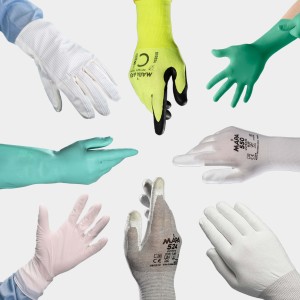
Personal protective equipment (PPE) protects the wearer against chemical, thermal, particulate, and physical hazards within the manufacturing environment. Other garments are designed primarily for contamination control, helping to suppress and contain the release of particles, fibres, and residues from personnel before they reach wafers, electronic components, optical surfaces, and sensitive process equipment.
A single garment may perform one function or both, and the two functions should be assessed separately.
This guide covers the full body-protection gowning system used in semiconductor wafer fabrication, microelectronics, electronics manufacturing, MEMS, optics, photonics and other advanced-technology environments.
The standards explained in this guide apply principally to PPE: garments designed to protect the wearer against identified hazards. These include chemical protective suits, gowns, aprons, oversleeves, overboots and protective hoods. Where such garments protect against risks that may cause death, serious injury or irreversible damage to health, they fall within Category III of PPE Regulation (EU) 2016/425.
Other garments commonly worn in cleanrooms protect the product and controlled environment rather than the wearer. Their contamination-control role is not a protective function for the person wearing them. Where such items carry PPE markings, they are typically associated with Category I minimal-risk protection unless specifically certified for another purpose.
These items are included because they form part of the same gowning system, but they are identified throughout as product-protection or contamination-control garments.
Understanding which function a garment performs determines the item selected, the applicable standard and how it should integrate with the wider gowning and PPE system.
2. Key Standards
The following standards apply to garments classified as PPE: those intended to protect the wearer.
The protective clothing Type classifications describe different forms of exposure rather than a simple scale of increasing protection.
| Type | Protection against | Relevant standard |
|---|---|---|
| Type 3 | Pressurised liquid jets | EN 14605 |
| Type 4 | Liquid spray | EN 14605 |
| Type 5 | Airborne solid particulates | EN ISO 13982-1 |
| Type 6 | Limited liquid splash | EN 13034 |
Many garments carry more than one classification, such as Type 5/6, because they are designed to protect against more than one form of exposure.
The Type classification should be treated as the starting point for selection. It does not confirm suitability for every chemical or application. Chemical compatibility, permeation and penetration data, seam construction, closures, garment fit and the expected exposure conditions should also be reviewed.
2.1 EN 14605 – Liquid Chemical Protection (Type 3 and Type 4)
EN 14605 defines two commonly specified categories of liquid chemical protective clothing:
- Type 3 garments provide protection against liquid chemical jets and pressurised liquid exposure.
- Type 4 garments provide protection against liquid spray.
Semiconductor wafer fabrication frequently uses highly corrosive or hazardous chemicals, including hydrofluoric acid, sulphuric acid, nitric acid, hydrochloric acid, phosphoric acid, oxidising chemicals, solvents, developers, strippers and other specialist process chemicals.
During wet-bench cleaning and chemical processing, operators may manually load, unload, lower or raise wafer carriers and components into process tanks. These activities can create a risk of splashes, droplets and low-energy spray.
For routine wet-bench operations, the primary foreseeable exposure is normally accidental splashing and liquid spray. Where suitable engineering controls are present, including splash guards, enclosed tank designs, local exhaust ventilation, automated handling and established working procedures, EN 14605 Type 4 clothing may therefore represent the more relevant form of protection, subject to the site-specific risk assessment and the chemicals involved.
Type 3 garments provide liquid-tight protection for more severe exposure scenarios involving pressurised chemical releases, liquid jets, substantial direct liquid contact or uncontrolled leakage.
These conditions are not normally associated with correctly controlled routine wafer processing. However, non-routine activities may create significantly greater risks.
Equipment maintenance, chemical line breaking, pump or pipework repairs, bulk chemical transfer, spill response, decontamination and emergency intervention can involve pressurised leaks or uncontrolled releases. In these circumstances, Type 3 clothing may be more appropriate, subject to a task-specific risk assessment.
Selection between Type 3 and Type 4 should therefore be based on the anticipated form and severity of exposure. The Type classification alone does not confirm chemical compatibility, and the garment’s permeation, penetration, material, seam and closure performance should be reviewed against the specific chemicals involved.
2.2 EN ISO 13982-1 – Protection Against Airborne Solid Particulates (Type 5)
EN ISO 13982-1 defines requirements for full-body protective clothing designed to protect against penetration by hazardous airborne solid particulates.
It is intended for situations where solid hazardous particles may be dispersed in air. It is not a general cleanroom garment standard and does not establish that a garment is low-shedding or suitable for contamination-sensitive production.
In semiconductor and related advanced-manufacturing environments, Type 5 garments may be relevant during specific maintenance, cleaning or decontamination activities where hazardous residues or particulates could become airborne.
Examples may include chamber cleaning, filter replacement, equipment servicing and work involving process residues, fine metal-containing particles, gallium arsenide residues, ceramic dust or contaminated extraction systems.
Type 5 garments are commonly combined with Type 6 protection, and many disposable protective suits carry both classifications.
2.3 EN 13034 – Limited Chemical Splash Protection (Type 6)
EN 13034 defines the requirements for protective clothing offering limited protection against liquid chemical splashes.
Type 6 garments are designed for low-level, short-duration contact with liquid chemicals where there is no foreseeable risk of saturation, immersion, sustained spray or pressurised liquid exposure.
This standard may be relevant in semiconductor, microelectronics and electronics environments where incidental chemical splashes are foreseeable, for example during light cleaning, laboratory work or the controlled handling of small quantities of process liquids.
Type 6 represents limited liquid splash protection and is commonly selected where comfort and mobility are required alongside basic chemical protection.
A Type 6 classification does not confirm that the garment is suitable for every chemical. The material, seams and closures should be assessed against the actual chemical, concentration, exposure time and task.
2.4 EN 14325 – Test Methods and Performance Classification for Chemical Protective Clothing
EN 14325 provides test methods and performance classifications used to assess the materials, seams and construction of chemical protective clothing.
It supports the Type classifications defined in EN 14605, EN ISO 13982-1 and EN 13034 and enables different aspects of garment performance to be compared.
The practical significance of these performance classifications is considered in Section 3.
2.5 EN 1149-5 – Protective Clothing with Electrostatic Properties
EN 1149 covers the electrostatic properties of protective clothing. EN 1149-5 specifies material and design performance requirements for electrostatic dissipative protective clothing worn as part of a complete grounded system, helping to reduce the risk of electrostatic discharges that could cause ignition in explosive atmospheres.
Electrostatic protection may be an important consideration in industries where static charge presents a safety or process risk. However, compliance with EN 1149-5 does not indicate protection against chemical, biological, heat or other hazards. Where multiple hazards are present, garments should be selected according to all relevant protective requirements and applicable standards.
In semiconductor and other controlled manufacturing environments, it is also important to distinguish between protective clothing certified to EN 1149-5 and garments used as part of an ESD control programme. Although both relate to the management of electrostatic charge, their purpose, application and applicable standards may differ.
For more information on electrostatic discharge control, see our ESD guidance. Coming soon.
2.6 EN 14126 – Protection Against Infective Agents
EN 14126 specifies performance requirements and test methods for protective clothing intended to protect against infective agents.
It is not a standalone garment Type classification. It is normally applied alongside a primary protective clothing standard such as Type 3, Type 4, Type 5 or Type 6.
The standard includes tests assessing resistance to penetration by contaminated liquids, biological aerosols and infective agents.
EN 14126 is not generally relevant to semiconductor, microelectronics, electronics, optics or photonics manufacturing because biological hazards are not normally primary occupational risks in these industries.
Protective clothing selection in these sectors is more commonly driven by chemical splash protection, hazardous particulate protection, thermal risks, ESD control and contamination-control requirements.
EN 14126 may occasionally be relevant where electronics or precision manufacturing takes place within a medical-device, diagnostic or mixed-use facility. However, it should only be specified where an infective-agent hazard has been identified through risk assessment.
2.7 EN ISO 11612 – Heat and Flame Protection
EN ISO 11612 specifies requirements for protective clothing designed to protect against heat and flame.
Heat and flame protection is not generally a primary consideration in semiconductor, microelectronics or electronics cleanrooms, where chemical hazards, contamination control and ESD requirements are normally more relevant.
However, specialist maintenance activities involving furnaces, hot quartzware, ovens or other high-temperature process equipment may require suitable thermal protective clothing, subject to a task-specific risk assessment.
Where EN ISO 11612 applies, the garment should be selected according to the particular heat or flame hazard identified rather than its overall range of performance ratings.
2.8 Partial Body Protective Clothing – PB Classifications
Partial-body protective clothing is used where protection is required for specific areas of the body rather than full-body coverage. Depending on the garment and certification, this may include protection against limited chemical splash, liquid spray, pressurised liquid exposure or hazardous airborne solid particulates.
Examples include EN 13034 Type PB(6) for limited chemical splash, EN ISO 13982-1 Type PB(5) for hazardous airborne solid particulates, and EN 14605 Type PB(4) or PB(3) for liquid spray or pressurised liquid exposure.
Where additional protection is required during wafer cleaning, wet processing, chemical handling or equipment maintenance, supplementary PPE such as protective gowns, aprons, oversleeves and boot covers may be worn over the primary cleanroom garment system.
A protective lab coat may also fall within this category where it is specifically designed and certified to an appropriate partial-body standard.
These garments provide targeted protection to the areas of the body most likely to be exposed. Protective gowns or aprons may protect the front of the body, while oversleeves provide additional protection to the arms and forearms. Boot covers may be used where protection is required for the lower legs or footwear.
Partial-body protection can be particularly relevant at wet benches, chemical dispensing stations, manual wafer-processing areas and during certain maintenance activities. Operators may already be wearing a full cleanroom coverall as part of the facility’s contamination-control system, making it impractical to don a second protective coverall over the top. In these situations, supplementary PPE such as gowns, aprons, oversleeves and boot covers can provide additional targeted protection while integrating more easily with the existing cleanroom garment system.
The garment combination should provide suitable overlap between the gown, sleeves, gloves and footwear. Exposed gaps at the wrists, neck, front closure or lower legs may compromise protection.
Selection should be based on the actual hazard and exposure conditions, including the substance involved, concentration, temperature, duration and extent of exposure, garment material, seam construction and compatibility with other PPE.
2.9 Category I – Simple PPE and Contamination-Control Items
Some items commonly worn in cleanrooms, including bouffant caps / mob caps, beard covers, simple shoe covers, visitor coats and non-protective lab coats, are not intended to protect the wearer from serious workplace hazards. Their primary purpose in semiconductor, microelectronics and other electronics environments is to protect the cleanroom environment, product and manufacturing process by containing hair, fibres, dirt and other contamination released or carried by personnel.
Where such products are classified as PPE, they are generally associated with Category I minimal-risk applications. This may reflect their use in other working environments, where they can provide limited protection against minor risks such as superficial contact with dirt or dust. In an electronics cleanroom, however, their primary purpose is contamination control rather than protection of the wearer.
Visitor coats and non-protective lab coats may also be used to cover ordinary clothing and reduce the transfer of fibres and contamination into controlled areas. Unless specifically certified for a protective function, they should not be assumed to provide protection against chemicals, hazardous particulates, heat or other workplace hazards.
These products should therefore be selected primarily according to the facility’s contamination-control requirements and internal gowning procedures. Users should follow the company’s cleanroom protocol, including any requirements for garment type, layering, changing frequency and the sequence of donning and removal.
In higher-control areas, such as some ISO Class 5 electronics cleanrooms, a bouffant cap / mob cap may be worn underneath a reusable laundered polyester cleanroom hood. Similarly, a disposable CPE shoe cover may be worn over the footwear, with a reusable cleanroom overboot worn over the top as part of the approved gowning system.
These items should not be assumed to provide chemical, hazardous particulate or other higher-level protection unless they are specifically designed and certified for that purpose.
Note on cleanroom face masks: Standard cleanroom face masks used for contamination control are intended to help protect the product and cleanroom environment from droplets and particles released by the wearer. They are not respiratory protective equipment and should not be relied upon to protect the wearer from hazardous airborne substances. See section 4.1 Contamination Control - Protecting the Product on the Respiratory Protection page for further guidance.
3. What the Standards Mean in Practice
Protective clothing classifications should be treated as the starting point for selection rather than confirmation that a garment is suitable for every chemical or application. The garment’s material performance, seams, closures, fit and compatibility with the expected exposure conditions should also be considered.
The method of donning and doffing should form part of the evaluation, particularly for chemical protective clothing. Different garment designs and manufacturers may require different procedures to achieve the intended protection and to minimise the risk of contaminating the wearer or surrounding area during removal.
A suitable evaluation should therefore consider the complete system of use, including garment selection, compatibility with other PPE, donning, use, removal and disposal or decontamination, to support a complete and documented assessment of suitability.
A practical way to assess protective clothing is to consider the complete process in four stages:
Select – Check – Wear – Remove
- Select: Review the garment classification, material, seams and fit.
- Check: Confirm chemical performance data and compatibility with gloves, footwear, respiratory protection and other PPE.
- Wear: Consider the correct donning method and how the garment performs during the task.
- Remove: Plan safe doffing, disposal or decontamination to minimise the risk of exposing the wearer or transferring contamination.
3.1 Performance Levels Under EN 14325
EN 14325 provides test methods and performance classifications for chemical protective clothing materials and seams.
Properties assessed may include abrasion resistance, flex cracking, tear resistance, tensile strength, puncture resistance, seam strength and resistance to chemical penetration and permeation.
Performance is expressed as individual classes or levels, with higher classifications generally indicating improved performance in that specific test.
These classifications allow more meaningful comparisons between garments carrying the same Type rating.
Two Type 6 garments may meet the same overall classification while having significantly different levels of durability, seam strength or puncture resistance.
Mechanical performance may be especially important where garments are worn around wet benches, process equipment, chamber interiors, pipework, maintenance tools and restricted-access machinery.
A garment that tears, punctures or degrades during use may compromise both wearer protection and contamination control.
4. Cleanroom Clothing and Its Role
This section covers the principal types of cleanroom clothing used in semiconductor, microelectronics, electronics and related controlled manufacturing environments.
4.1 Coveralls and Suits
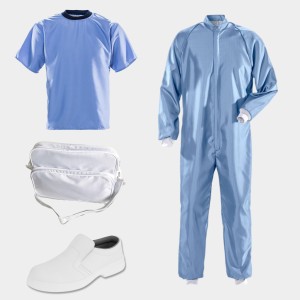
In semiconductor wafer fabrication, microelectronics, MEMS, optics, photonics and other contamination-sensitive manufacturing environments, cleanroom garments are selected primarily to minimise the release of particles, fibres and residues from personnel.
In highly controlled semiconductor manufacturing areas, particularly ISO Class 5 and cleaner environments, reusable cleanroom coveralls manufactured from tightly woven polyester fabrics are generally preferred.
These garments are designed for repeated specialist laundering, inspection and qualification. They provide consistent contamination-control performance, low particle shedding and compatibility with wider ESD control programmes.
Reusable cleanroom garments used in semiconductor and electronics environments commonly incorporate carbon-based dissipative yarns within the polyester fabric, often visible as a grid or stripe pattern. These yarns provide a controlled path for electrostatic charge to dissipate, helping to reduce charge accumulation on the garment as part of the facility’s wider ESD control programme.
This distinction is important because reusable ESD cleanroom garments are designed to provide controlled electrostatic dissipation, whereas disposable suits are more commonly described as anti-static. An anti-static disposable garment may help reduce static build-up, but it should not automatically be assumed to provide the same controlled dissipative performance as a purpose-designed reusable ESD cleanroom garment.
Garment selection should therefore consider whether the requirement is simply to reduce static generation or to integrate the garment into a defined ESD control programme alongside suitable flooring, footwear, grounding and other controls.
Disposable non-woven coveralls may be suitable in less contamination-sensitive electronics manufacturing environments, including many ISO Class 6–8 cleanrooms and controlled areas.
Some disposable garments are also described by manufacturers as suitable for ISO Class 5 cleanrooms. However, ISO cleanroom classification relates to airborne particle concentration and does not, by itself, confirm that a garment meets the specific contamination-control or electrostatic requirements of semiconductor, microelectronics or precision-electronics manufacturing.
Product data should therefore be reviewed for particle and fibre release, garment construction and processing, packaging cleanliness and any applicable ESD or other process-specific requirements.
Disposable coveralls may also be used within semiconductor facilities for specific applications such as equipment maintenance, contractor access, shutdown work, installation, decontamination and other controlled activities permitted by site procedures.
5. Cleanroom Relevance
5.1 Contamination Control – Protecting the Product
Protecting the product is the primary function of most cleanroom body covering used in semiconductor, microelectronics, electronics, MEMS, optics and photonics manufacturing.
Personnel are a major source of contamination within a cleanroom. The human body continuously releases skin particles, hair, textile fibres, perspiration, oils and other residues.
These contaminants can enter the controlled environment and deposit on semiconductor wafers, optical surfaces, sensors, MEMS devices, electronic components and process equipment.
In semiconductor wafer fabrication, contamination can affect photolithography, etching, deposition, diffusion, metallisation, wafer cleaning, chemical mechanical polishing, metrology, assembly, packaging and testing.
Even very small particles can cause defects, interfere with patterning or reduce production yield.
In optics and photonics manufacturing, particles, fibres, oils and residues can affect lenses, mirrors, optical coatings, infrared optics, laser components, and other precision optical surfaces.
In electronics and microelectronics assembly, contamination can interfere with bonding, adhesion, coating, soldering, encapsulation, connector performance, and long-term component reliability.
Cleanroom garments act as a barrier between personnel and the manufacturing environment. They contain contamination at source rather than relying solely on filtration / cleaning to remove it after release.
Garments should therefore be assessed for particle shedding, fibre release, fabric construction, garment coverage, seam design, laundering quality, packaging cleanliness, electrostatic performance and durability during use. The complete gowning system should be considered, including the coverall/gown, hood, face mask, bouffant cap/mob cap, gloves, shoe covers/overboots or cleanroom footwear.